Industry 4.0 has been promising a manufacturing revolution for a decade. In 2025, the value realization is finally arriving — and the gap between manufacturers who have made the shift and those still planning to is compounding faster than most leadership teams realize.
For most of the last decade, "smart manufacturing" existed primarily in conference keynotes, vendor roadmaps, and the pilot programs of a handful of well-resourced global manufacturers with the budget to experiment at scale. For the average mid-size manufacturer — running a plant built in the nineties, operating equipment that predates the smartphone, and managing with spreadsheets and clipboards that have served adequately if not brilliantly — the smart factory felt like a distant ambition rather than an immediate operational priority.
That distance has collapsed. Deloitte's 2025 Smart Manufacturing and Operations Survey found that 57 percent of manufacturers are now using cloud computing, an equal proportion are leveraging data analytics, and 46 percent are using industrial IoT solutions in production. The moment of value realization that Industry 4.0 has been promising has arrived — not uniformly, and not without significant implementation challenges, but undeniably and in ways that are beginning to show up in competitive outcomes across industries.
For manufacturers still in planning mode — evaluating pilots, building the business case, waiting for more certainty — the strategic question has shifted. It is no longer whether smart manufacturing technology works at scale. It is how quickly you can catch up to competitors who started two years ago and are now compounding their learning advantage every quarter.

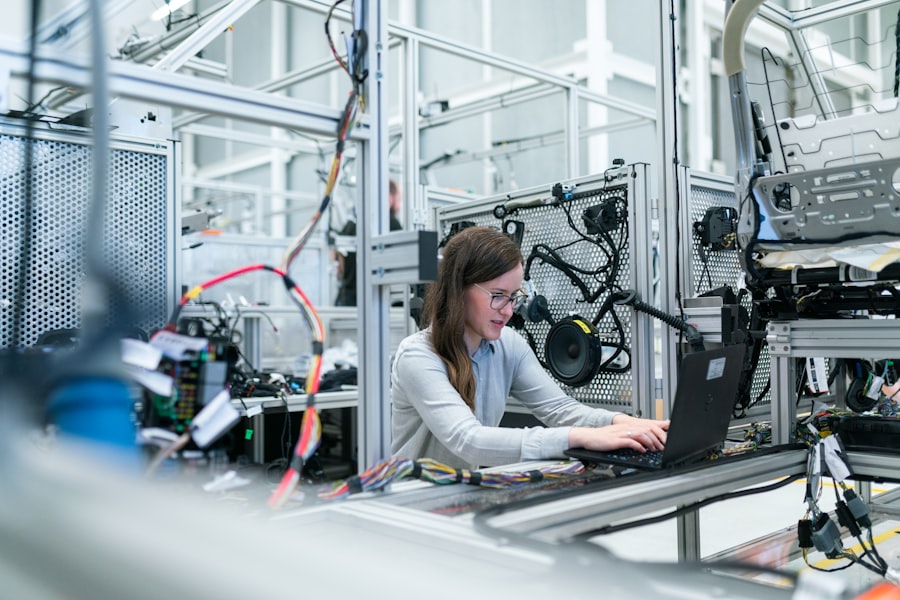
The smart factory of 2025 integrates IIoT sensors, AI-powered analytics, and cloud connectivity into a production environment that makes real-time operational decisions rather than waiting for human review.
What's Actually Driving the Shift — and Why It Happened Now
The acceleration of smart manufacturing adoption in 2025 is not the result of a single technology breakthrough. It is the convergence of several forces that reached critical mass simultaneously.
5G connectivity has become commercially available at industrial scale in most major manufacturing regions. The significance of this is not speed — most IIoT applications do not require the bandwidth that 5G provides. The significance is reliability, latency, and the ability to connect thousands of sensors and devices on a factory floor without the cable infrastructure that wired connectivity requires. For facilities where retrofitting network cabling is impractical or prohibitively expensive, 5G makes connectivity possible in a way that it simply was not three years ago.
The cost of sensors has fallen to the point where instrumentation decisions that were previously driven by ROI calculations are now default considerations. Putting a vibration sensor on a critical motor used to require justifying the hardware cost. Today those sensors cost a fraction of what they did five years ago, and the question is not whether to instrument but how to manage and extract value from the data they generate.
And AI — specifically the generation of AI tools that became accessible to non-specialist users from 2023 onward — has dramatically reduced the analytical capability required to make sense of the data that IIoT systems generate. Earlier generations of industrial analytics required data science expertise to operate. Current generation tools are increasingly accessible to manufacturing engineers and operations managers who understand the process but are not data specialists. This democratization of industrial analytics is removing one of the most significant adoption barriers that limited smart manufacturing to large enterprises with specialist technical teams.
The IT/OT Convergence That's Finally Happening
One of the most structurally significant shifts in manufacturing technology in 2025 is the integration of information technology and operational technology — IT and OT — that has been discussed for years but is only now becoming a practical reality at scale. For most manufacturers, these two worlds have operated almost entirely separately. IT managed enterprise systems: ERP, CRM, supply chain, finance. OT managed production systems: PLCs, SCADA, DCS, the equipment that actually makes things. The two worlds used different protocols, different vendors, different teams, and often different organizational reporting lines.
The smart factory requires these worlds to exchange data continuously. Production data from the shop floor needs to flow into enterprise systems so that quality events can trigger supply chain responses, maintenance alerts can update work order queues, and production output can update inventory in real time. This integration is technically complex and organizationally complicated — the OT team has legitimate concerns about introducing enterprise IT protocols into operational environments where reliability and safety are paramount. But the manufacturers who have navigated this integration successfully are operating with a level of real-time operational visibility that is transforming how they manage production, quality, and cost simultaneously.
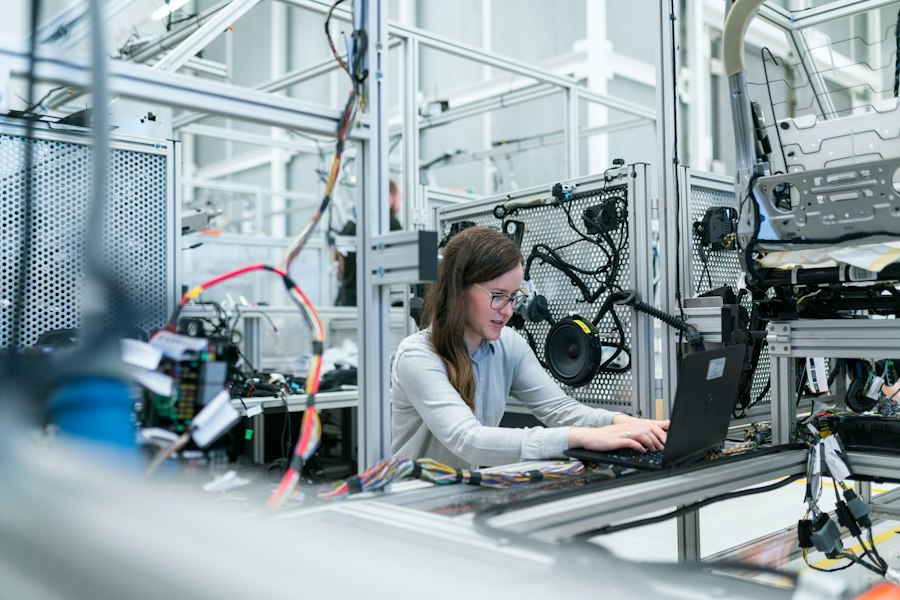
The convergence of IT and OT systems gives manufacturing leaders real-time visibility from the machine level to the enterprise level — enabling decisions that were previously impossible without hours of manual data collection.
Where Smart Manufacturing Is Delivering Measurable Value
The use cases generating the clearest and most broadly validated ROI in manufacturing are predictive maintenance, quality intelligence, and energy management — three areas where the value of real-time data over scheduled inspection or batch analysis is large and directly quantifiable.
Predictive maintenance has the longest track record and the most robust evidence base. AI-driven predictive maintenance — which uses vibration, temperature, acoustic, and electrical signatures from equipment to identify failure patterns before failure occurs — has reduced unplanned downtime by 35 to 55 percent in documented deployments according to industry research. For process manufacturers where a single line stoppage costs tens of thousands of dollars per hour, the economics are immediate and obvious. For discrete manufacturers where downtime costs are lower but quality impacts from degrading tooling are significant, the payback calculation is slightly more complex but still clearly positive in most implementations.
Quality intelligence — using machine vision, inline sensing, and AI-powered defect detection to catch quality problems at the point of production rather than at end-of-line inspection — is delivering defect rate reductions that translate directly into rework cost, warranty liability, and customer satisfaction. Manufacturers that have deployed vision-based quality systems describe not just the defect reduction but the shift in quality culture that comes from having real-time quality data visible on the shop floor — problems are surfaced and investigated immediately rather than discovered days later when inspection runs.
Energy management is the use case that has moved fastest from pilot to production in the last eighteen months, driven partly by energy cost volatility and partly by sustainability commitments that are no longer voluntary for manufacturers with European customers or global reporting requirements. Smart energy management systems that optimize machine scheduling around peak pricing windows, identify energy waste from equipment running in standby states, and provide granular visibility into consumption by machine and production line are delivering energy cost reductions of 15 to 35 percent in documented implementations — a figure that is meaningful enough to fund broader smart manufacturing investment in many facilities.
The Implementation Challenges Nobody Puts in the Brochure
For every manufacturer that has successfully deployed smart manufacturing at scale, there are others that have spent significant money on pilots that did not progress to production deployment. Understanding why is as important as understanding the success cases — because the failure patterns are consistent and avoidable.
The most common failure mode is the connectivity gap. A manufacturer instruments a production line with sensors, builds a data pipeline, and discovers that the legacy PLC controlling the equipment cannot expose the data the system needs. The protocol translation layer required to bridge old and new is expensive, time-consuming, and often requires specialized expertise that is not readily available from generalist integrators. Organizations that did not invest in an honest assessment of their OT infrastructure before committing to an IIoT project frequently find that the infrastructure remediation required is significantly more expensive than the sensor and analytics investment they budgeted for.
The second failure mode is data volume without analytical capability. Sensors generate enormous quantities of data. Without the analytical framework and the people capable of interpreting it, this data accumulates in databases that nobody queries and dashboards that nobody uses. The organizations that get value from IIoT data are the ones that start with specific questions — what is causing this machine to fail? What process parameters correlate with our highest defect rates? — and work backward from those questions to the data required to answer them. The organizations that deploy sensors first and figure out what to do with the data later are consistently disappointed.
The third is cybersecurity. The same connectivity that enables smart manufacturing creates attack surfaces that did not exist when OT systems were isolated from enterprise networks and the internet. Manufacturing is an increasingly frequent target for ransomware specifically because production disruption creates immediate economic pressure to pay. Organizations that connect OT systems to enterprise networks without implementing appropriate network segmentation, access controls, and monitoring are accepting risks they often do not fully understand until something goes wrong.
Sustainability Is No Longer Optional — and Smart Manufacturing Is How You Prove It
One dimension of smart manufacturing that is becoming impossible to separate from the operational conversation is sustainability. Carbon-neutral certifications are facilitating premium pricing of 10 to 20 percent in B2B contracts in several industrial categories. An estimated 65 percent of global customers are now willing to pay more for products from manufacturers with verified sustainability credentials. And regulatory requirements — particularly for manufacturers selling into European markets, where supply chain carbon disclosure requirements are tightening — are making environmental performance reporting a compliance requirement rather than a competitive differentiator.
Smart manufacturing technology is the mechanism by which manufacturers can actually measure, manage, and verify their environmental performance at the granularity that customers and regulators are starting to demand. A manufacturer that can provide a customer with precise data about the energy consumption, water usage, and emissions intensity of the specific products they purchase — derived from real instrumentation rather than industry estimates — is in a fundamentally different position than one that is reporting at the facility or company level with assumptions filling in the gaps.
This is not primarily an environmental argument. It is a commercial argument. The manufacturers building real-time environmental monitoring into their smart factory infrastructure now are building a capability that will command premium pricing, secure contract renewals, and satisfy regulatory requirements that are tightening on a timeline that is closer than most North American manufacturers have accounted for in their strategic planning.
What to Do If You're Behind
If your organization has been watching the smart manufacturing shift from the sidelines — tracking the case studies, attending the conferences, running the occasional pilot — the path forward is not to attempt a facility-wide transformation in a single program. That approach consistently produces expensive, slow, and demoralizing outcomes.
The approach that works is starting with one high-value problem in one location. Choose a problem that is costing real money — unplanned downtime on a critical asset, defect rates on a specific line, energy consumption in a specific facility — and build the data and analytics capability required to address that specific problem. Get a measurable result. Use that result to build the organizational confidence and the internal expertise to tackle the next problem.
This is not a slow approach. Organizations that execute it well are deploying their third and fourth use cases while their single-program competitors are still in implementation on their first. And the accumulated learning from multiple focused deployments — about connectivity, data management, change management, and analytical methods — compounds into a smart manufacturing capability that is significantly more robust than anything a single large program can deliver.
The manufacturers who understand this are moving. The ones who are still waiting for the technology to mature are waiting for something that already happened. The question now is not whether to start. It is how quickly you can catch up to the ones who already did.