GenAI, ML, AI governance, data platforms, analytics, BI
Explore how a federal court ruling could affect AI agent accountability, risk, and data governance.
Sep 10, 2026
More to read
Explore the hidden cost of shadow AI, from duplicate tools and unmanaged subscriptions to security exposure, compliance risk, and wasted finance spend.
Explore why organisations are scaling back AI agents, how governance influences deployment decisions, and what responsible adoption looks like in practice.
Learn why the biggest AI model is not always the smartest B2B choice and how companies can compare cost, performance, accuracy, and business value.
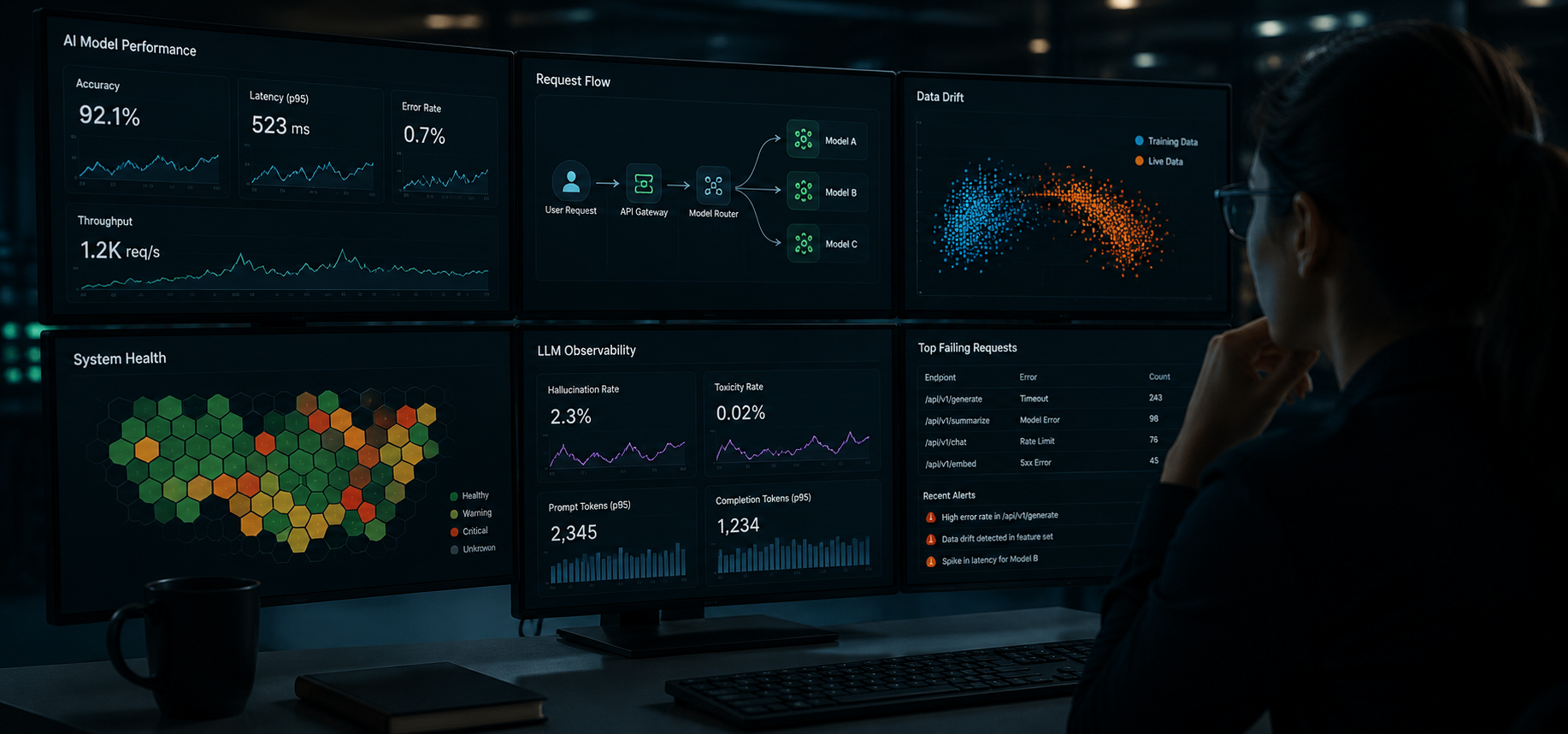
AI systems are harder to manage without clear observability, leaving teams blind to failures, model drift, hidden risks, and performance gaps.
Most AI strategies fail because business data remains scattered, messy, and unused, blocking automation, insights, and better decision-making.
Buying AI can expose businesses to lawsuits, indemnity gaps, IP claims, and vendor liability limits that leave buyers carrying legal risk.
AI agents may be live in production, but weak governance after pilot stages can create risk across data, decisions, workflows, and systems.
The EU AI Act's high-risk system obligations are in force. Penalties run up to €35M or 7% of global revenue. Most businesses still don't have a compliance owner
Most enterprise AI investments are being made without a credible way to measure return. Here's what the leading organisations are tracking — and why it's workin
Generative AI is already in your marketing team's daily workflows. The question isn't whether — it's whether your team is using it well or creating new risks.
Data governance may seem boring, but neglecting it can lead to compliance failures, data breaches, and costly errors. Learn why strong governance is critical fo
60% of organizations already have AI agents in production. Gartner predicts 40% of enterprise workflows by end of 2025. Here's what separates leaders from pilot